Research Projects
I have worked on multiple projects during my MS and PhD. Here’s a promo video of my research as part of the CSE fellowship.
Assessing impact of spatial heterogeneity and gaps in aquatic vegetation canopies on hydrodynamics and transport (2018-2023)
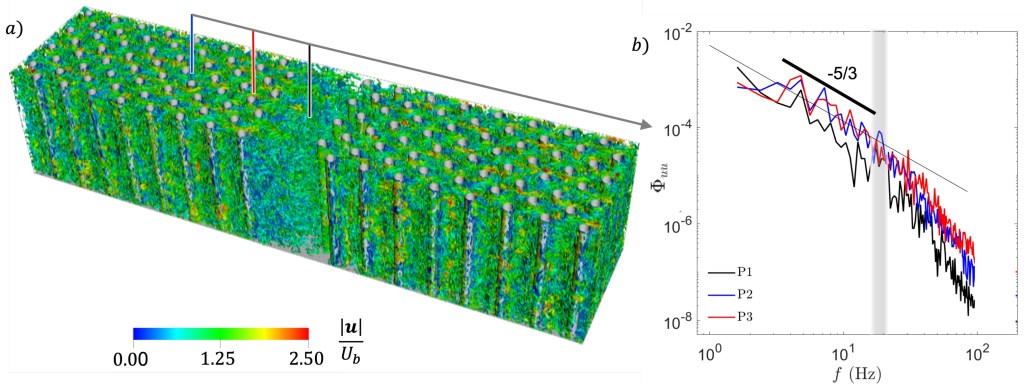
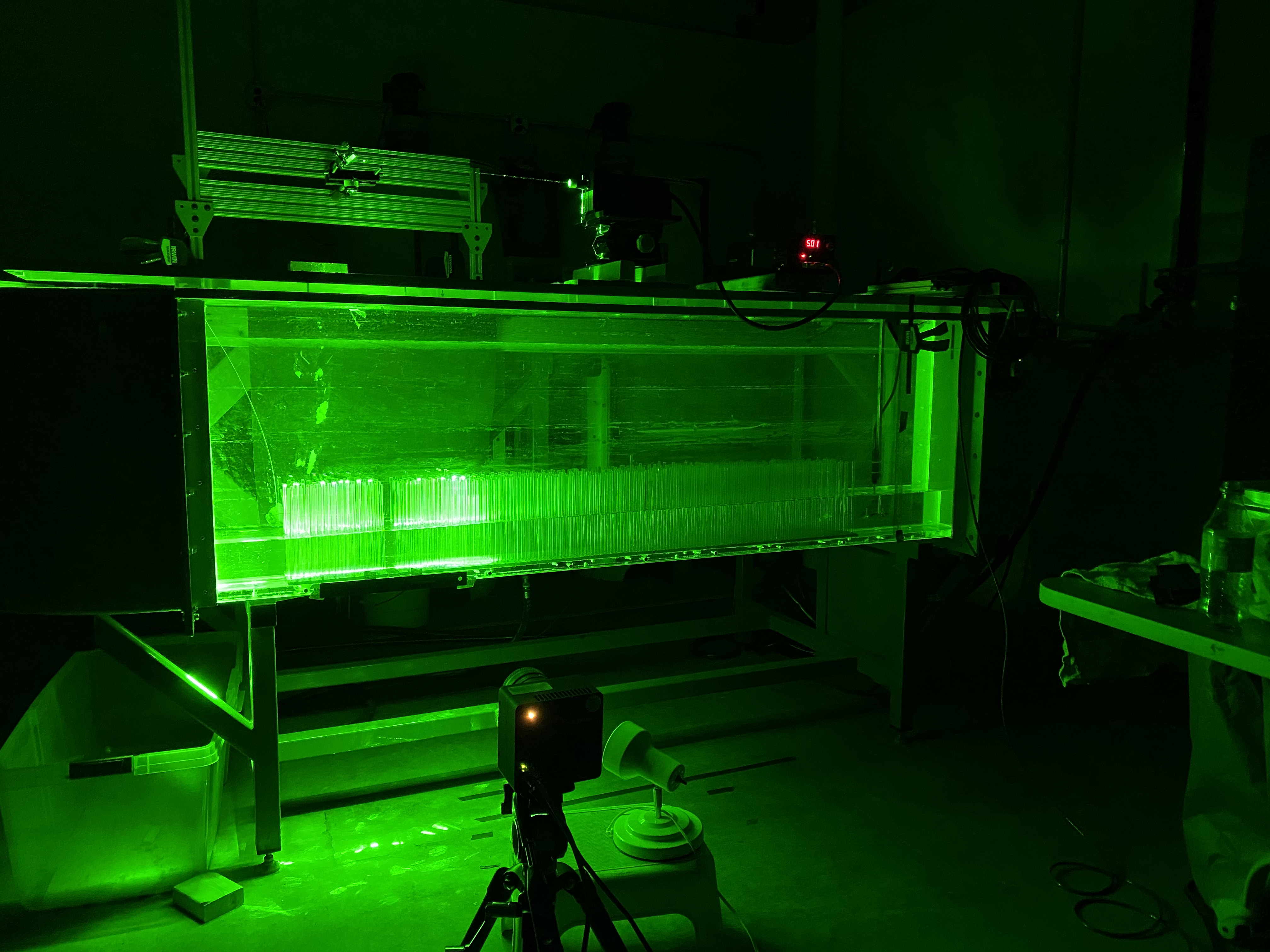
I investigate the impacts of canopy gaps and geometric arrangement of aquatic vegetation canopies on hydrodynamics and scalar transport processes. Towards this end, I will (have) perform(ed) numerical simulations and flume experiments to answer the following questions:
- How do canopy gaps alter flow hydrodynamics, and is the altered flow representative of the flow within canopy?
- How do canopy gaps alter suspended sediment dynamics?
- How does geometric arrangement of the canopy alter the hydrodynamics within the canopy, and can we analytically predict the spatial heterogeneity in flow statistics?
- How can the identified experimental biases be accounted for in sediment and oxygen dynamics processes within unidirectional and oscillatory flows?
Publications:
Ranjan, P., Mittal, K., Chamorro, L. P., & Tinoco, R. O. (2022). Impact of gaps on the flow statistics in an emergent rigid canopy. Physics of Fluids, 34(6), 066601.
Ranjan, P. & Tinoco, R. O. (2024). On the effects of turbulence modulation driven by suspended sediment stratification in emergent rigid canopies. Submitted to Journal of Geophysical Research: Earth Surface (published)
Effect of aquatic vegetation on the interfacial exchange of dissolved oxygen under waves (2022-2023)

Aquatic vegetation is known to provide habitat for aquatic fauna while also influencing the hydrodynamics, interfacial exchange and transport processes. Dissolved oxygen (DO) plays a vital role in sustaining aquatic flora and fauna in coastal environments. However, impact of vegetation on exchange of oxygen form atmosphere under waves remains unexplored. In this project I’m exploring impact of emergent and submerged rigid vegetation on the reaeration of DO for various wave conditions.
Sea-Lamprey response to turbulence (June-Dec 2021)
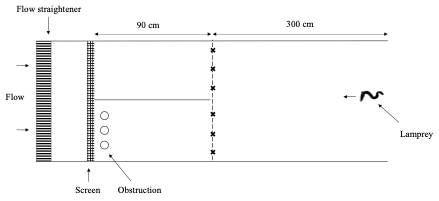
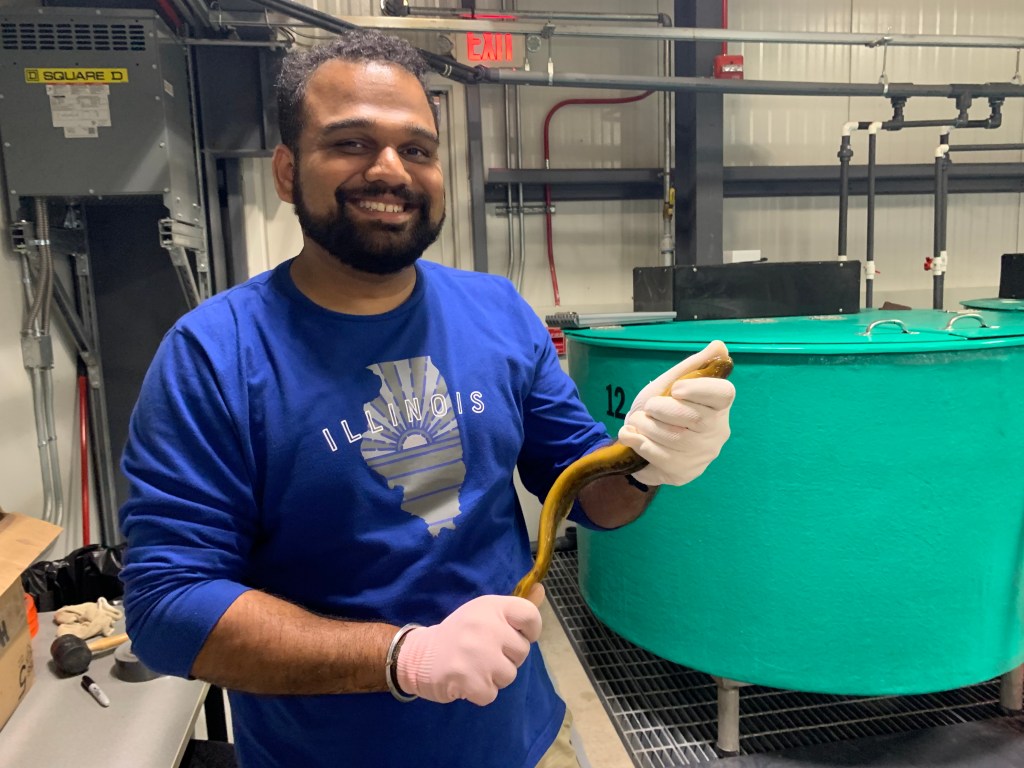
Sea-Lamprey are an invasive species in the Great Lakes ecosystem, and have hampered the native fish population. Controlling Sea-Lamprey population is pivotal to restoring the ecological balance of the great lakes and saving the fisheries industry. Existing control measures include capturing the upstream migrating adult Sea Lamprey during its spawning season. This project was aimed at redesign and improving trapping efficiency of existing traps using knowledge of Sea Lamprey’s attraction towards specific types of turbulence. To this end we observed the choice of Sea-Lamprey towards various orientations of turbulent eddies in a laboratory flume at Hammond Bay Biological Station. We found that Sea-Lamprey response is likely explained by joint-turbulence statistics rather than a single statistic such as turbulence intensity.
Publications:
Dennis III, C., Ranjan, P.*, Suski, C. & Tinoco, R. O. (2024) Sea lamprey display context-dependent attraction to specific types of turbulence within a laboratory flume. (Under Review)
Assessing macro-plastic release from landfills (2020-present)
Landfills are a sink of non-recycled single use plastic products and pose a threat of contaminating the ecosystem upon accidental release. In this project we identify and model the major pathways (wind, flood, degradation, scavenging) of macroplastic release from landfills. Using a novel risk framework on 496 Indian cities, we have developed a risk map for plastic pollution from landfills in India. Further, I have developed a physical framework for quantifying the amount of plastic release during strong wind events. I performed wind tunnel experiments to identify the threshold for initiation of motion for commonly disposed plastic objects in landfills.
Publications:
Ranjan, P., Yadav, V., & Tinoco, R. O. (2023) model for wind driven environmental losses of plastics from landfills. (Under Preparation)
Yadav, V., Sherly, M. A., Ranjan, P., Prasad, V., Tinoco, R. O., & Laurent, A. (2022). Risk of plastics losses to the environment from Indian landfills. Resources, Conservation and Recycling, 187, 106610.
Yadav, V., Sherly, M. A., Ranjan, P., Tinoco, R. O., Boldrin, A., Damgaard, A., & Laurent, A. (2020). Framework for quantifying environmental losses of plastics from landfills. Resources, Conservation and Recycling, 161, 104914.
 Pallav Ranjan